
In today’s times, when environmental requirements are significantly higher, heating with a heat pump is becoming the best alternative. The method is the most environmentally friendly, preferred over installations running on wood and coal. To learn the advantages of heating with a heat pump, you should also familiarize yourself with its functioning.
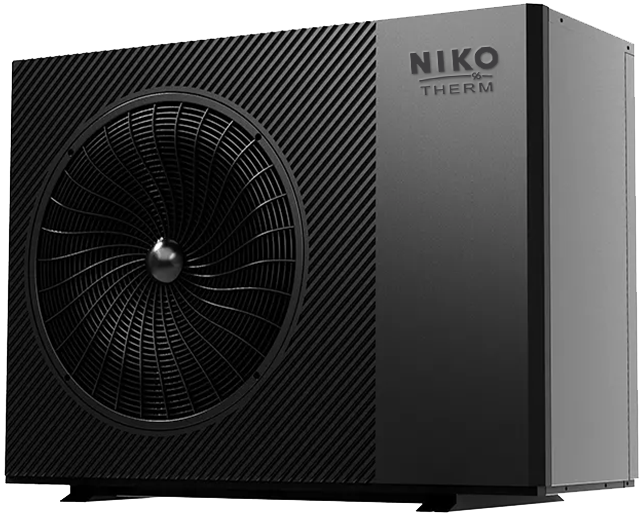
This is an air conditioning device whose task is to transfer heat energy to different places. The heat pump is extremely functional and can be used for both heating and cooling. The air conditioner delivers the heat energy to where you want it. You can use it to transfer heat into or out of different rooms.
By the way, both the refrigerator and the air conditioner are heat pump systems. The device can be used for domestic purposes, business buildings and public institutions. The system not only heats and cools the premises, but also serves to supply hot water. The importance and popularity of the heat pump in the modern world is constantly growing. This is also due to the lower electricity consumption required for its operation.
For example, the heat pump requires 1kW/h of electricity to operate, while at the same time delivering 4kW/h of heat. In this way, the system is able to reduce electricity consumption by nearly 80%. With such indicators, the heat pump becomes a heat energy supply device that is unparalleled.
In addition, modern technologies allow you to shorten the time during which the system operates. You can program its operation by hours. And with this option you will further reduce your electricity bills. Heat pumps are divided into three main types.
The first is the so-called “air-to-water“. In it, the heat from the outside air is transferred to a specially designed local installation. The device has an outdoor and indoor unit. The “air-to-water” heat pump can operate completely autonomously and is not affected by the characteristics of the place where it is installed. What is important for the system are the atmospheric conditions.
The energy efficiency coefficient of the pump is floating and is affected by the outside air temperature. The higher winter values in Bulgaria make the system suitable for year-round use. Even if the outside temperatures drop sharply, the heat pump technology allows it to work efficiently and completely safely.
The second type of system is “water-water”. The pump extracts energy from groundwater, the year-round temperature of which must be between 7 and 14 degrees. Accordingly, the efficiency coefficient of the machine increases, reaching values from 5 to 8. In order to build such a system, geothermal studies must be carried out. However, such types of pumps are not particularly common in our country. An important factor for its functioning is the calculation of its thermal power. In addition, there are requirements for the water flow rate.
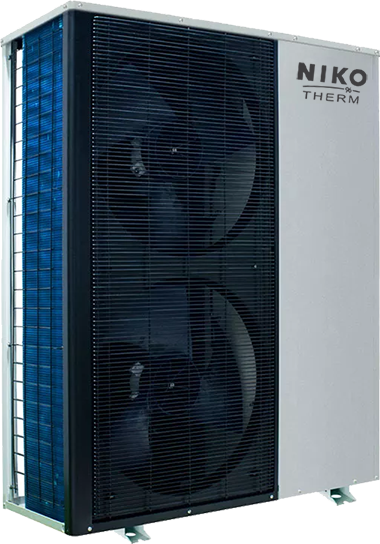
The third type of system is “earth-water“, and in its operation the thermal energy is extracted from the surface. When extracting energy from the corresponding depth, the temperature should be about 14 degrees. This increases the energy efficiency coefficient of the pump, reaching 5. And this, in turn, reduces electricity consumption by as much as 80%. This type of pump is also the most common, due to its lower initial investment and the possibility of being placed almost anywhere.